Heritage Home Care was born from a simple conviction: the objects that carry our family stories deserve the same respect and skill that created them in the first place.
In the winter of 1971, a seventeen-year-old Robert Callahan stepped into J.W. Turner & Sons, a Bermondsey cabinet-making shop that had operated continuously since 1843. Under the watchful eye of Arthur Turner III, Robert learned the foundational principles that would define his career: patience is not a virtue in restoration — it is a requirement.
After years of working across workshops in Paris, Florence, and Edinburgh, Robert returned to the United States in 1985. Two years later, with a modest set of hand tools and an unwavering standard of excellence, he opened Heritage Home Care in a converted carriage house on Boston's Newbury Street.
What began as a one-man operation now employs twelve full-time artisans, including three accredited horologists, two upholstery specialists, and a conservator trained at the Smithsonian. Yet the workshop's guiding ethos remains unchanged: every piece that enters our doors is treated as if it were our own family's most cherished possession.
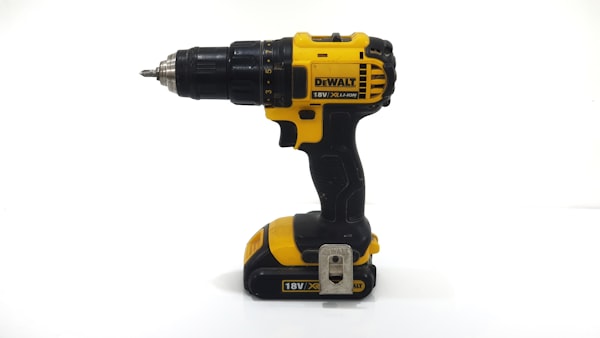
We rely on mortise-and-tenon, dovetail, and dowel joints executed entirely by hand. Machine-cut joints may be faster, but they lack the precision fit and long-term durability that hand-cut connections provide. Many of our repairs are designed to outlast the original construction.
We never use spray-on polyurethane. Every surface is finished by hand using shellac-based French polish or oil-rubbed techniques that are faithful to the period of the piece. The result is a depth of luster that modern finishes simply cannot replicate.
From hide glue sourced from the same recipe used in the eighteenth century, to hand-forged brass hardware, we insist on materials that match the era of each piece. Authenticity is not an aspiration — it is our baseline standard.
Our workshop is staffed by specialists, not generalists. Each artisan brings a distinct area of mastery, ensuring that every restoration is handled by the person most qualified to do the work.
Margaret holds a Master's in Conservation from the Winterthur/University of Delaware program and spent eight years at the Smithsonian's National Museum of American History. She oversees all structural assessments and conservation plans for high-value and museum-grade pieces.
Certified by the American Watchmakers-Clockmakers Institute, David has repaired and restored more than 1,200 timepieces, from eighteenth-century bracket clocks to early twentieth-century railroad chronometers. His specialty is rebuilding worn movements to factory specifications.
Eleanor trained at the Royal School of Needlework in London before joining our team in 2005. She works exclusively with traditional upholstery methods — hand-tied coil springs, horsehair padding, and hand-stitched decorative finishes — to preserve the integrity of each seat and cushion.